 sanbuphy
200 lines
16 KiB
Markdown
200 lines
16 KiB
Markdown
|
|
<!-- trigger vercel build -->
|
|
<div align='center'>
|
|
<img src="./assets/head.png" alt="easy-vibe" width="100%">
|
|
</div>
|
|
<div align="center">
|
|
<h1>Easy-Vibe : Learn Vibe Coding from 0 to 1 </h1>
|
|
<img src="https://img.shields.io/github/stars/datawhalechina/easy-vibe?style=flat&logo=github" alt="GitHub stars"/>
|
|
<img src="https://img.shields.io/github/forks/datawhalechina/easy-vibe?style=flat&logo=github" alt="GitHub forks"/>
|
|
<img src="https://img.shields.io/badge/language-Chinese-brightgreen?style=flat" alt="Language"/>
|
|
<a href="https://github.com/datawhalechina/easy-vibe"><img src="https://img.shields.io/badge/GitHub-Project-blue?style=flat&logo=github" alt="GitHub Project"></a>
|
|
<img src="https://img.shields.io/badge/build-passing-brightgreen" alt="Build Status">
|
|
</div>
|
|
|
|
<div align="center">
|
|
|
|
[中文](https://github.com/datawhalechina/easy-vibe/blob/main/README.md) | [English](https://github.com/THU-SIGS-AIID/ai-vibe-coding-101/blob/main/README.md)
|
|
|
|
</div>
|
|
|
|
<div align="center">
|
|
<p>零基础,在项目制学习中掌握 Vibe Coding 与 AI 技能,构建第一个 AI 原生产品</p>
|
|
</div>
|
|
|
|
## 项目介绍
|
|
|
|
2025年,被很多人视为AI编程的元年。越来越多的人开始用AI写代码,但往往做出来的还停留在玩具层面——不知道如何用Vibe Coding组织开发流程,不知道该选哪些工具,更不清楚从原型到上线中间还差哪些关键步骤。
|
|
|
|
我们采用循序渐进的**三阶段实战路径**:第零阶段通过小游戏快速上手AI编程,第一阶段掌握Vibe Coding工作方式并完成Web应用原型,第二阶段学习全栈开发与部署上线,第三阶段构建跨平台复杂应用。
|
|
|
|
每个阶段都配有完整项目实战,让你在真实挑战中从玩具走向产品,最终具备**将任何想法落地为可用应用**的能力。
|
|
|
|
我们相信,掌握Vibe Coding并配合系统化训练,你一个人就能成为**集前后端开发、AI 能力集成、产品设计于一身的全能开发者**。
|
|
|
|
本项目主要面向三类学习者:
|
|
|
|
- **新手(普通人 / 产品与运营侧)**:帮助非技术背景角色和入门学习者听懂关键概念,完成第一个 AI 小工具或产品原型。
|
|
- **初中级开发者(有一定基础的学生和开发者)**:系统掌握 vibe coding 与原生 AI 应用开发。
|
|
- **高级开发者(公司与初创、开源与独立开发者)**:支持团队和个人快速搭建、验证与迭代原生 AI 应用。
|
|
|
|
## 📖 内容导航
|
|
|
|

|
|
|
|
### 总附录
|
|
|
|
[AI 能力词典:常见 AI 核心概念与名词、场景解释](docs/appendix/ai-capability-dictionary.md)
|
|
|
|
### 零、幼儿园
|
|
|
|
| 章节 | 关键内容 | 状态 |
|
|
| :----------------------------------------------------------------------------------------- | :------------------------------------- | :--- |
|
|
| [前言:学习地图](docs/stage-0/0.1-learning-map/index.md) | 整体学习路径导览 | ✅ |
|
|
| [初级一:AI 时代,会说话就会编程](docs/stage-0/0.2-ai-capabilities-through-games/index.md) | 通过贪吃蛇等案例初步感受 AI 编程的能力 | ✅ |
|
|
|
|
### 一、AI 产品经理
|
|
|
|
| 章节 | 关键内容 | 状态 |
|
|
| :---------------------------------------------------------------------------------- | :------------------------------------------------ | :--- |
|
|
| [初级二:认识 AI IDE 工具](docs/stage-1/1.1-introduction-to-ai-ide/index.md) | 学会使用 IDE,掌握界面结构和高效提示方式 | ✅ |
|
|
| [初级三:动手做出原型](docs/stage-1/1.2-building-prototype/index.md) | 从产品分析拆解,到多页面产品原型实现的完整闭环 | ✅ |
|
|
| [初级四:给原型加上 AI 能力](docs/stage-1/1.3-integrating-ai-capabilities/index.md) | 理解并完成常见 AI 能力(文本图片视频)的 API 接入 | ✅ |
|
|
| [初级五:完整项目实战](docs/stage-1/1.4-complete-project-practice/index.md) | 模拟真实场景、接受用户反馈迭代并完成项目展示 | ✅ |
|
|
| [大作业:做一个完整的 Web 应用原型并展示](docs/stage-1/1.5-final-project/index.md) | 独立用 AI IDE 落地并演示一个可用 Web 应用 | ✅ |
|
|
|
|
#### 附录
|
|
|
|
| 章节 | 关键内容 | 状态 |
|
|
| :-------------------------------------------------------------------------- | :---------------------------------------- | :--- |
|
|
| [附录A:产品思维补充](docs/stage-1/appendix-a-product-thinking/index.md) | 从想法评估到需求拆解与 MVP 的产品思维框架 | ✅ |
|
|
| [附录B:常见报错及解决方案](docs/stage-1/appendix-b-common-errors/index.md) | vibe coding 中的常见错误及排查方法 | ✅ |
|
|
|
|
### 二、初中级开发工程师
|
|
|
|
#### 前端部分
|
|
|
|
| 章节 | 关键内容 | 状态 |
|
|
| :------------------------------------------------------------------------------------------------------------------------------------ | :--------------------------------------------------------------------------- | :--- |
|
|
| [前端零:使用 lovart 生产素材](docs/stage-2/frontend/2.0-lovart-assets/) | 学会用 lovart 批量生成人物、场景等视觉素材,为 UI 设计和前端开发提供素材基础 | 🚧 |
|
|
| [前端一:Figma 与 MasterGo 入门](docs/stage-2/frontend/2.1-figma-mastergo/) | 用设计工具梳理信息架构和页面结构,为前端实现打基础 | 🚧 |
|
|
| [前端二:构建第一个现代应用程序-UI 设计](docs/stage-2/frontend/2.2-ui-design/) | 基于设计稿完成组件化界面,实现从设计到代码的第一条链路 | 🚧 |
|
|
| [前端三:参考 UI 设计规范与多产品 UI 设计](docs/stage-2/frontend/2.3-multi-product-ui/) | 围绕统一主视觉扩展多产品界面,练习系统化设计能力 | 🚧 |
|
|
| [前端四:一起做霍格沃茨画像](docs/stage-2/frontend/2.4-hogwarts-portraits/chapter4-lets-build-hogwarts-portraits.md) | 从 0 到 1 做出接入 AI 能力的前端应用,串联设计与开发 | ✅ |
|
|
|
|
#### 后端与全栈部分
|
|
|
|
| 章节 | 关键内容 | 状态 |
|
|
| :------------------------------------------------------------------------------------------------------------------------------------ | :------------------------------------------------------------ | :--- |
|
|
| [后端一:什么是 API](docs/stage-2/backend/2.1-what-is-api/extra2/extra2-what-is-api.md) | 理解 HTTP 接口与请求响应模型,为后端集成与联调做准备 | ✅ |
|
|
| [后端二:从数据库到 Supabase](docs/stage-2/backend/2.2-database-supabase/chapter5/chapter5-from-database-to-supabase.md) | 在 Supabase 上落地数据库和 API,打通数据模型与前端页面 | ✅ |
|
|
| [后端三:大模型辅助编写接口代码与接口文档](docs/stage-2/backend/2.3-ai-interface-code/) | 用大模型协助生成接口与数据库文档及代码,实现可读可测的后端 | 🚧 |
|
|
| [后端四:Git 工作流](docs/stage-2/backend/2.4-git-workflow/extra1/extra1-what-is-git-and-what-is-github.md) | 在 Git 工作流中管理代码,进行版本控制和协作 | ✅ |
|
|
| [后端五:Zeabur 部署](docs/stage-2/backend/2.5-zeabur-deployment/extra6/extra6-zeabur-what-is-it-and-how-to-deploy-web-applications.md) | 将应用部署到 Zeabur 上线 | ✅ |
|
|
| [后端六:现代 CLI 开发工具](docs/stage-2/backend/2.6-modern-cli/extra7/extra7-cli-ai-coding-tools-and-the-principles-of-test-driven-development.md) | 使用 CLI 类 AI 编程工具加速开发与调试,形成个人工程化工作流 | ✅ |
|
|
| [后端七:如何集成 Stripe 等收费系统](docs/stage-2/backend/2.7-stripe-payment/) | 接入支付系统,完成收费链路与基础结算流程 | 🚧 |
|
|
| [大作业 1:构建第一个现代应用程序-全栈应用](docs/stage-2/assignments/2.1-fullstack-app/) | 综合前端、后端与支付模块,完成可上线的全栈 Web 应用 | 🚧 |
|
|
| [大作业 2:现代前端组件库 + Trae 实战](docs/stage-2/assignments/2.2-modern-frontend-trae/) | 使用现代前端组件库与 Trae,独立完成可登录注册并支持收费的产品 | 🚧 |
|
|
|
|
#### AI 能力附录
|
|
|
|
| 章节 | 关键内容 | 状态 |
|
|
| :----------------------------------------------------------------------------------------------------------------------------------------------------------------------------------- | :------------------------------------------------------------- | :--- |
|
|
| [AI 一:Dify 入门与知识库集成](docs/stage-2/ai-capabilities/2.1-dify-knowledge-base/chapter3/chapter3-getting-started-with-dify-and-its-knowledge-base-integration.md) | 用 Dify Workflow 与基础 RAG 搭建工具类产品,为后续应用升级打样 | ✅ |
|
|
| [AI 二:学会查询 AI 词典与集成多模态 API](docs/stage-2/ai-capabilities/2.2-multimodal-api/extra3/extra3-ai-capability-starter-handbook.md) | 学会查找合适的模型与 API,并把文本、图像等多模态能力接入产品 | 🚧 |
|
|
|
|
### 三、高级开发工程师
|
|
|
|
| 章节 | 关键内容 | 状态 |
|
|
| :-------------------------------------------------------------------- | :----------------------------------------------------------- | :--- |
|
|
| [高级一:MCP 与 ClaudeCode Skills](docs/stage-3/core-skills/3.1-mcp-claudecode-skills/) | 通过 MCP 与 Skills 扩展 IDE 能力,把外部服务接成工具 | 🚧 |
|
|
| [高级二:如何让 Coding Tools 长时间工作](docs/stage-3/core-skills/3.2-long-running-tasks/) | 设计和配置长时间运行的任务,让 Coding Tools 更稳定可靠 | 🚧 |
|
|
| [高级三:多平台开发:如何构建微信小程序](docs/stage-3/cross-platform/3.3-wechat-miniprogram/) | 了解微信小程序生态,从官方模板到上线完成一个前端小程序 | ✅ |
|
|
| [高级四:多平台开发:如何构建微信小程序-包含后端](docs/stage-3/cross-platform/3.4-wechat-miniprogram-backend/) | 在小程序中接入数据库与后端逻辑,打通完整业务闭环 | 🚧 |
|
|
| [高级五:多平台开发:如何构建安卓程序](docs/stage-3/cross-platform/3.5-android-app/) | 使用 Expo 等工具,完成 Web/原生一体化的安卓应用开发 | 🚧 |
|
|
| [高级六:多平台开发:如何构建 iOS 程序](docs/stage-3/cross-platform/3.6-ios-app/) | 使用 Expo 等工具,完成 Web/原生一体化的 iOS 应用开发 | 🚧 |
|
|
| [高级七:如何构建属于自己的个人网页与学术博客](docs/stage-3/personal-brand/3.7-personal-website-blog/) | 从选型、搭建到部署,构建展示个人项目与学术成果的长久在线主页 | 🚧 |
|
|
|
|
#### AI 能力附录
|
|
|
|
| 章节 | 关键内容 | 状态 |
|
|
| :-------------------------------------------------------------------- | :------------------------------------------------------ | :--- |
|
|
| [高级 AI 一:什么是 RAG 以及它如何工作](docs/stage-3/ai-advanced/3.a1-rag-introduction/extra5-what-is-rag-and-how-does-it-work-and-future.md) | 系统理解 RAG 原理与常见架构,为复杂应用提供知识检索基础 | ✅ |
|
|
| [高级 AI 二:中高级 RAG 与工作流编排:以 LangGraph 为例](docs/stage-3/ai-advanced/3.a2-langgraph-advanced-rag/) | 使用 LangGraph 等工具设计多步工作流与中高级 RAG 系统 | 🚧 |
|
|
|
|
## 如何学习
|
|
|
|
- 根据个人能力,选择性地阅读和实践相关章节,如果有问题欢迎 issue 提问。
|
|
|
|
## 本地启动本课件
|
|
|
|
### 现代方案
|
|
|
|
在 AI IDE 对话框(vscode、cursor、trae 等)中,输入下列提示词启动本课件:
|
|
|
|
```
|
|
请你帮我运行这个项目的本地服务
|
|
```
|
|
|
|
### 旧方案
|
|
|
|
1. npm install
|
|
2. npm run dev
|
|
3. 打开浏览器访问 `http://localhost:3000` 即可查看。
|
|
|
|
## 参与贡献
|
|
|
|
- 如果你发现了一些问题,或者觉得任何可以改进本项目的地方,可以提 Issue 进行反馈。如果提完没有人回复你可以联系[保姆团队](https://github.com/datawhalechina/DOPMC/blob/main/OP.md)的同学进行反馈跟进~
|
|
- 如果你想参与贡献本项目,可以提 Pull Request,如果提完没有人回复你可以联系[保姆团队](https://github.com/datawhalechina/DOPMC/blob/main/OP.md)的同学进行反馈跟进~
|
|
- 如果你对 Datawhale 很感兴趣并想要发起一个新的项目,请按照[Datawhale 开源项目指南](https://github.com/datawhalechina/DOPMC/blob/main/GUIDE.md)进行操作即可~
|
|
|
|
## 🙏 感谢每位贡献者
|
|
|
|
- [散步-项目负责人](https://github.com/sanbuphy) (Datawhale成员)
|
|
- 方可-指导老师(Datawhale成员, 清华大学)
|
|
- [Yerim Kang](https://github.com/yerim25)(实践项目部分-清华大学)
|
|
- 赵芷霖(实践项目部分-清华大学)
|
|
- [李亦萱](https://yixuan20.github.io/)(页面美术设计-清华大学)
|
|
- AI Vibe Coding 101 内测群完整给建议体验的小伙伴们
|
|
|
|
### 特别感谢
|
|
|
|
- 感谢 [@Sm1les](https://github.com/Sm1les) 对本项目的帮助与支持
|
|
- 感谢所有为本项目做出贡献的开发者们 ❤️
|
|
|
|
<div align=center style="margin-top: 30px;">
|
|
<a href="https://github.com/datawhalechina/easy-vibe/graphs/contributors">
|
|
<img src="https://contrib.rocks/image?repo=datawhalechina/easy-vibe" />
|
|
</a>
|
|
</div>
|
|
|
|
## 联系我们
|
|
|
|
<div align=center>
|
|
<p>如果有问题提建议吐槽,或者想要一起交流,请扫描下方二维码</p>
|
|
<img src="assets/wechat.png" width="280">
|
|
|
|
<p>扫描下方二维码关注公众号:Datawhale</p>
|
|
<img src="https://raw.githubusercontent.com/datawhalechina/pumpkin-book/master/res/qrcode.jpeg" width="180" height="180">
|
|
</div>
|
|
|
|
## LICENSE
|
|
|
|
<a rel="license" href="http://creativecommons.org/licenses/by-nc-sa/4.0/">
|
|
<img
|
|
alt="知识共享许可协议"
|
|
style="border-width:0"
|
|
src="https://img.shields.io/badge/license-CC%20BY--NC--SA%204.0-lightgrey"
|
|
/>
|
|
</a>
|
|
<br />
|
|
本作品采用
|
|
<a rel="license" href="http://creativecommons.org/licenses/by-nc-sa/4.0/">
|
|
知识共享署名-非商业性使用-相同方式共享 4.0 国际许可协议
|
|
</a>
|
|
进行许可。
|
|
|
|
## Star History
|
|
|
|
[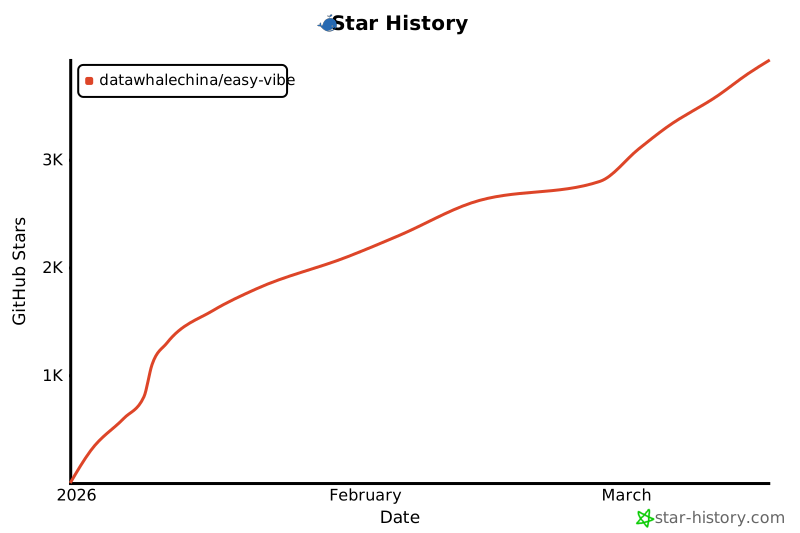](https://www.star-history.com/#datawhalechina/easy-vibe&type=date&legend=top-left)
|